Showing posts with label Art Nouveau interior. Show all posts

Wednesday, March 4, 2020

Rath Gyorgy Museum: Art Nouveau--a Hungarian Perspective


It was rainy yesterday, so we went to the list of museums we were saving for an indoor day, choosing the Rath Gyorgy Villa, Rath Gyorgy (1828-1905)--or Gyorgy Rath as we would say in the US--was an esteemed jurist and legal scholar.  In addition, he was an important collector of art, including major European paintings (now in the Museum of Fine Arts) and works of Art Nouveau, including those of Austria and England, but most significantly Hungarian Secession.  He organized the Museum of Applied Arts in 1881 and was its first director until 1896.

When he died, he left his art collection to his wife who, in turn, left it to the Museum of Applied Arts with the stipulation that it would form "the National Rath Gyorgy Museum constituting an auxiliary part of the Museum of Applied Arts, which is inalienable and must be contained together."  The museum was established in his villa at Varosligeti fasor 12, opened in 1906 and visited by Emperor (King in Hungary) Franz Jozsef in 1908.  In 1948, the collection was broken up for ideological reasons, the proletarian dictatorship considering it dangerous to celebrate a bourgeois apartment.  The museum re-opened in 2018.  It includes much of Rath's original collection (most specially Zsolnay pieces and tiles), many collected in a series of cases,  and a series of rooms designed to show what Hungarian Secession furniture and ornaments look like as used.

The highlight for me was the Dining Room.  In this room, no piece (furniture, art, table settings) has a straight line; every piece includes the Art Nouveau curve.


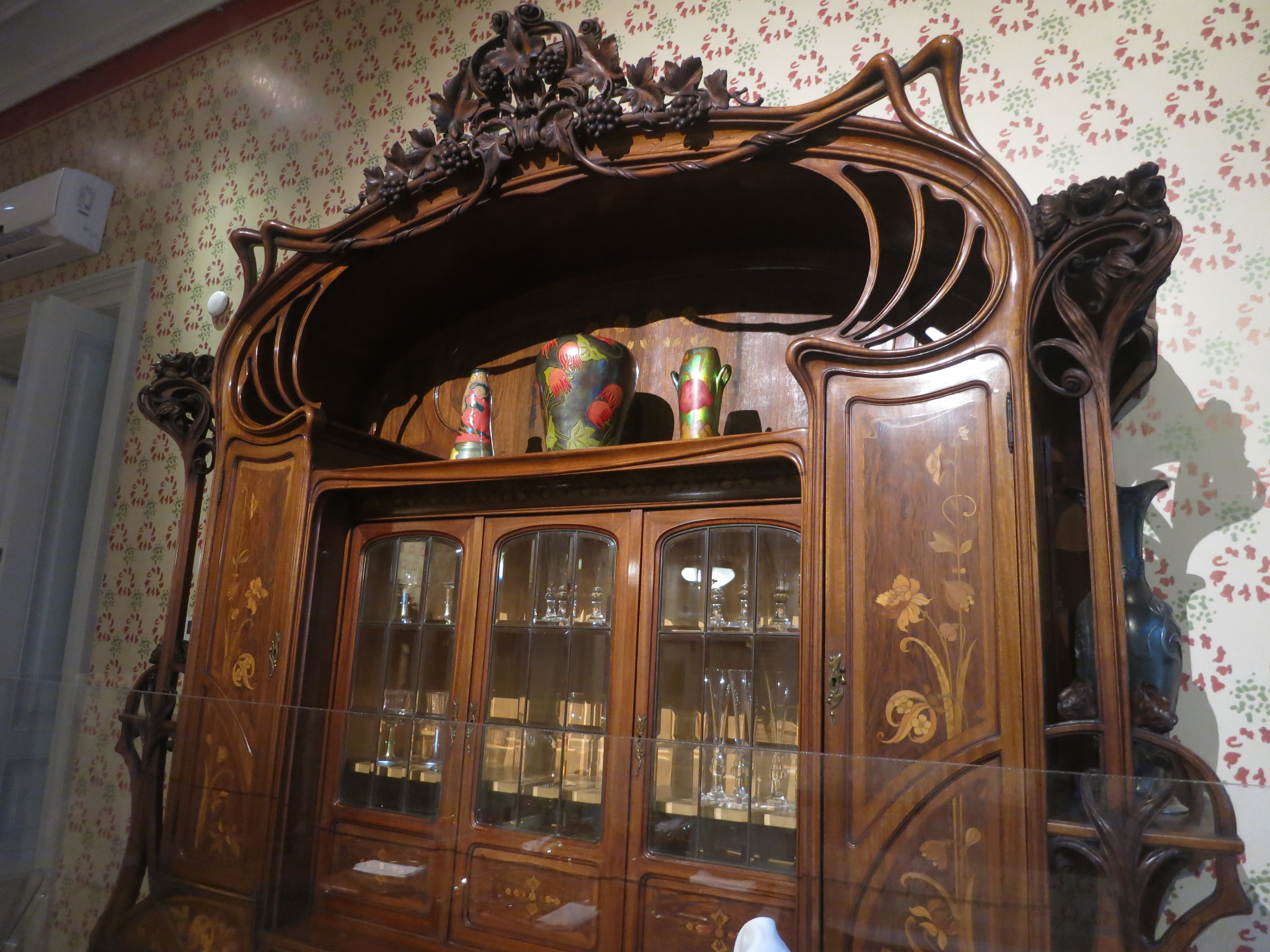


 There is also an Art Nouveau sitting room


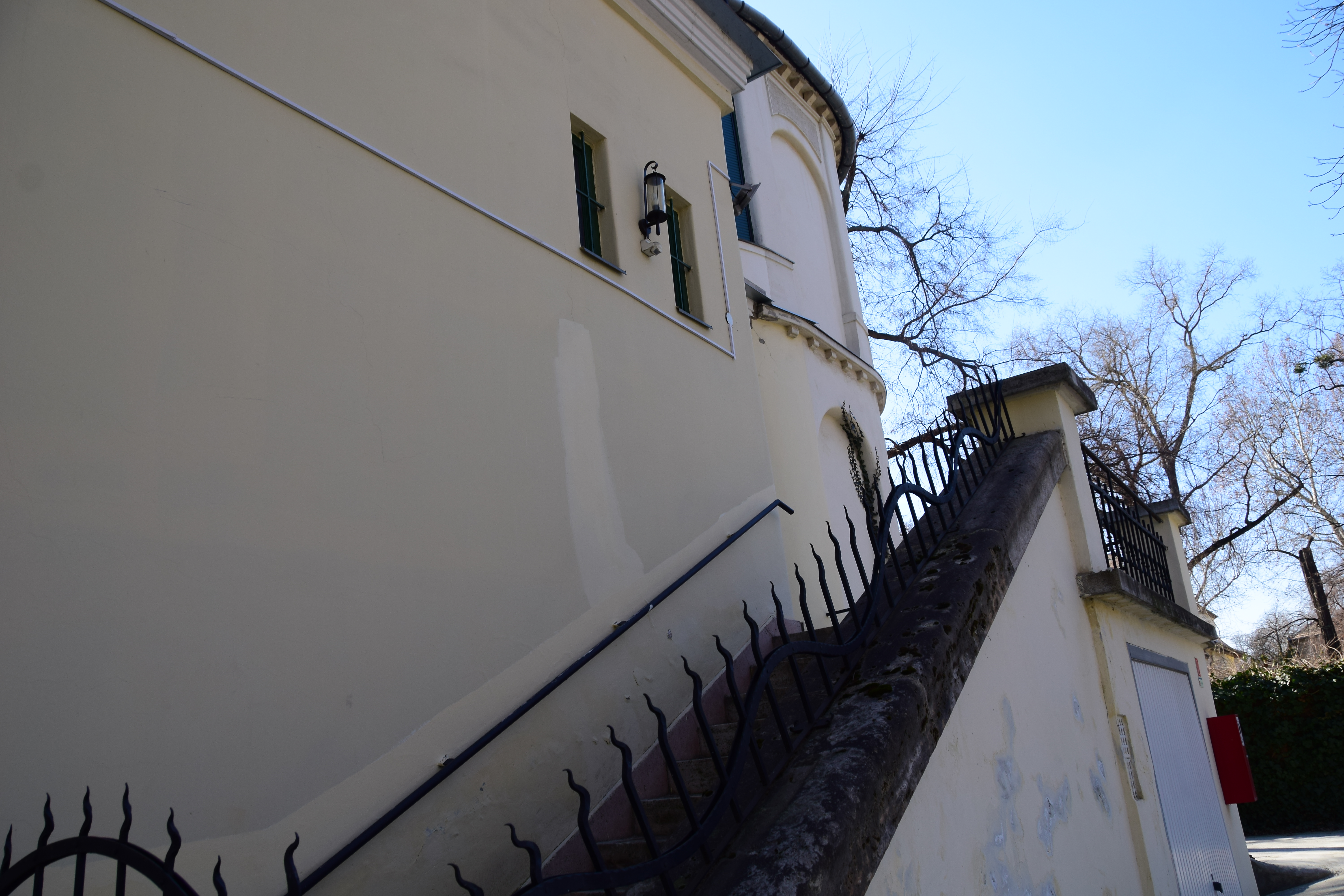
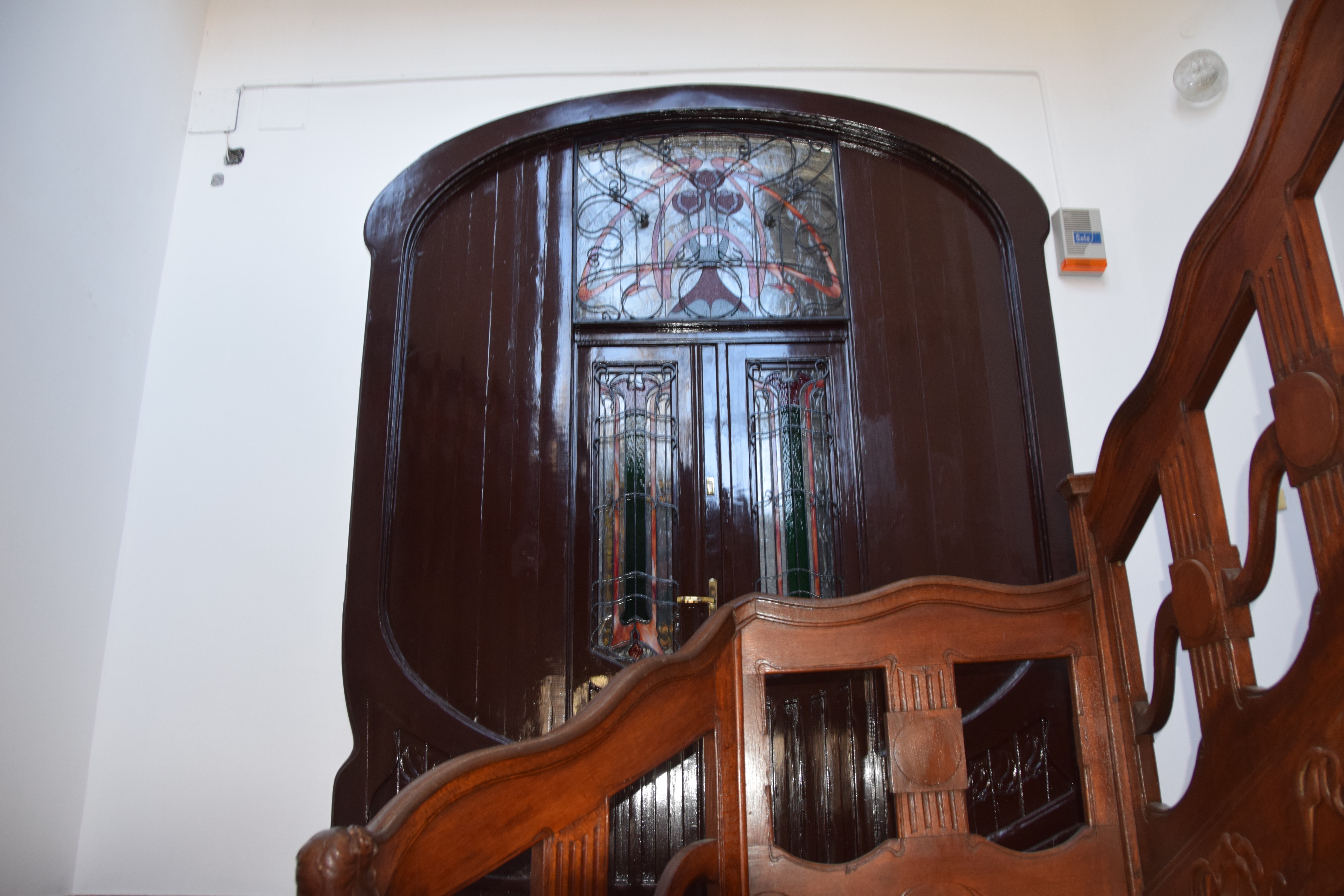
And there is the house itself,  stairs and wooden settings by Pal Horti, iron gates by Gyula Jungfer,.


 A beautifully organized and maintained museum: recommended for anyone interested in Art Nouveau or Secession.

From the Museum


#Rath Gyorgy Museum


Thursday, April 11, 2019

Marcell Komor and Dezso Jakob: The Liget Sanatorium and Its Dazzling Interior


The second iconic building we saw on our last day walk in Butdapaest is the Liget Sanatorium, built on Benczur utca 47 in 1907-1908 by Marcell Komor and Dezso Jakab.

I first discovered the architecture of Marcell Komor and Dezso Jakab in 2009, when I was in Timisoara Romania accompanying Tony on his Fulbright at the University of the West.  That spring, I saw their relatively simply but stunning bank in Timisoara, as well as the Cultural Palace and City Hall they built in Targu Mures and the homes and shopping arcade, the Black Eagle, they built in Oradea.  Later I saw their beautiful synagogue in Subotica in Serbia, as well as the town hall and other buildings in that city.  All of these are on my blog, as are most of their buildings in Budapest.

Komor and Jakab worked first with Odon Lechner before opening their own architectural firm.  And you can see how much they absorbed from Lechner.  They are perhaps the "sons" who most closely worked in Lechner's tradition.  I thought I had seen most of their important buildings but just on this trip I discovered another:  atorithe Liget Sanum .  This was my last great get, because I was again welcomed inside.

The Liget Sanatorium is a kind of luxury hospital retreat--the sort of builing that became more and more popular across Europe at the turn of the century.  It is adjacent to City Park, Varosliget, and is where Ady Endre, one of Hungary's most famous poets died.  It is thus a monument in several senses.

The entrance to the building is decorated to an extraordinary degree in some of the most beautiful (and expensive) Zsolnay tiles to be seen in the city.  Komor and Jakab use Lechner's tradition of lining the edges and filling in spaces with decorations.   The details are extraordinary.  Also beautiful is the wrought iron staircase with its cascading feathers and peacock feathers.  The Liget Sanatorium was the last building we saw on this Budapest visit.  It was a fabulous finale.  


#KomorAndJakab
LigetSanatorium
ArtNouveauInterior
Zsolnay


Saturday, March 23, 2019

Emil Vidor: The Villa Egger--Inside and Out


On our very last walk in Budapest, we saw the interiors of two iconic Art Nouveau buildings--each a BIG get.  Entering either would have been a triumph; both seemed like a miracle.  The posts that follow will showcase the interiors of these two buildings

The first is the  Egger Villa, at Varosligeti fasor 24, was built by Emil Vidor (1867-1952) in 1902.  It has been described as "among the purest--and most extravagant--examples of Art Nouveau architecture in the city."  It was the first building Vidor designed and executed on his own.

The exterior of the Egger Villa reflects Belgian and French Art Nouveau, particularly that of Victor Horty.  It's notable for its asymmetry, its subdued yet evocative floral imagery, and its spectacular use of the Art Nouveau curvilinear and organic line.  You have to look carefully to catch its details.

Some are obvious on the street-facing façade.


Others can be seen only by walking around the sides of the house.


 I was able to see the sides and back of the exterior because someone had left the usually locked gate open.  But as I walked around the side, I noticed someone walking in a door, and she kindly let me come in with her.  So I saw something I never expected to see:  the interior of this famous and beautiful building.  

Its beauty was totally unexpected.  Particularly the use of wood as ornament, probably reflecting Vidor's interest also in Finnish architecture.  Here are the fruits of my getting inside:


#EmilVidor
#EggerVidor
#ArtNouveauInteriors