Wednesday, March 4, 2020

Rath Gyorgy Museum: Art Nouveau--a Hungarian Perspective


It was rainy yesterday, so we went to the list of museums we were saving for an indoor day, choosing the Rath Gyorgy Villa, Rath Gyorgy (1828-1905)--or Gyorgy Rath as we would say in the US--was an esteemed jurist and legal scholar.  In addition, he was an important collector of art, including major European paintings (now in the Museum of Fine Arts) and works of Art Nouveau, including those of Austria and England, but most significantly Hungarian Secession.  He organized the Museum of Applied Arts in 1881 and was its first director until 1896.

When he died, he left his art collection to his wife who, in turn, left it to the Museum of Applied Arts with the stipulation that it would form "the National Rath Gyorgy Museum constituting an auxiliary part of the Museum of Applied Arts, which is inalienable and must be contained together."  The museum was established in his villa at Varosligeti fasor 12, opened in 1906 and visited by Emperor (King in Hungary) Franz Jozsef in 1908.  In 1948, the collection was broken up for ideological reasons, the proletarian dictatorship considering it dangerous to celebrate a bourgeois apartment.  The museum re-opened in 2018.  It includes much of Rath's original collection (most specially Zsolnay pieces and tiles), many collected in a series of cases,  and a series of rooms designed to show what Hungarian Secession furniture and ornaments look like as used.

The highlight for me was the Dining Room.  In this room, no piece (furniture, art, table settings) has a straight line; every piece includes the Art Nouveau curve.


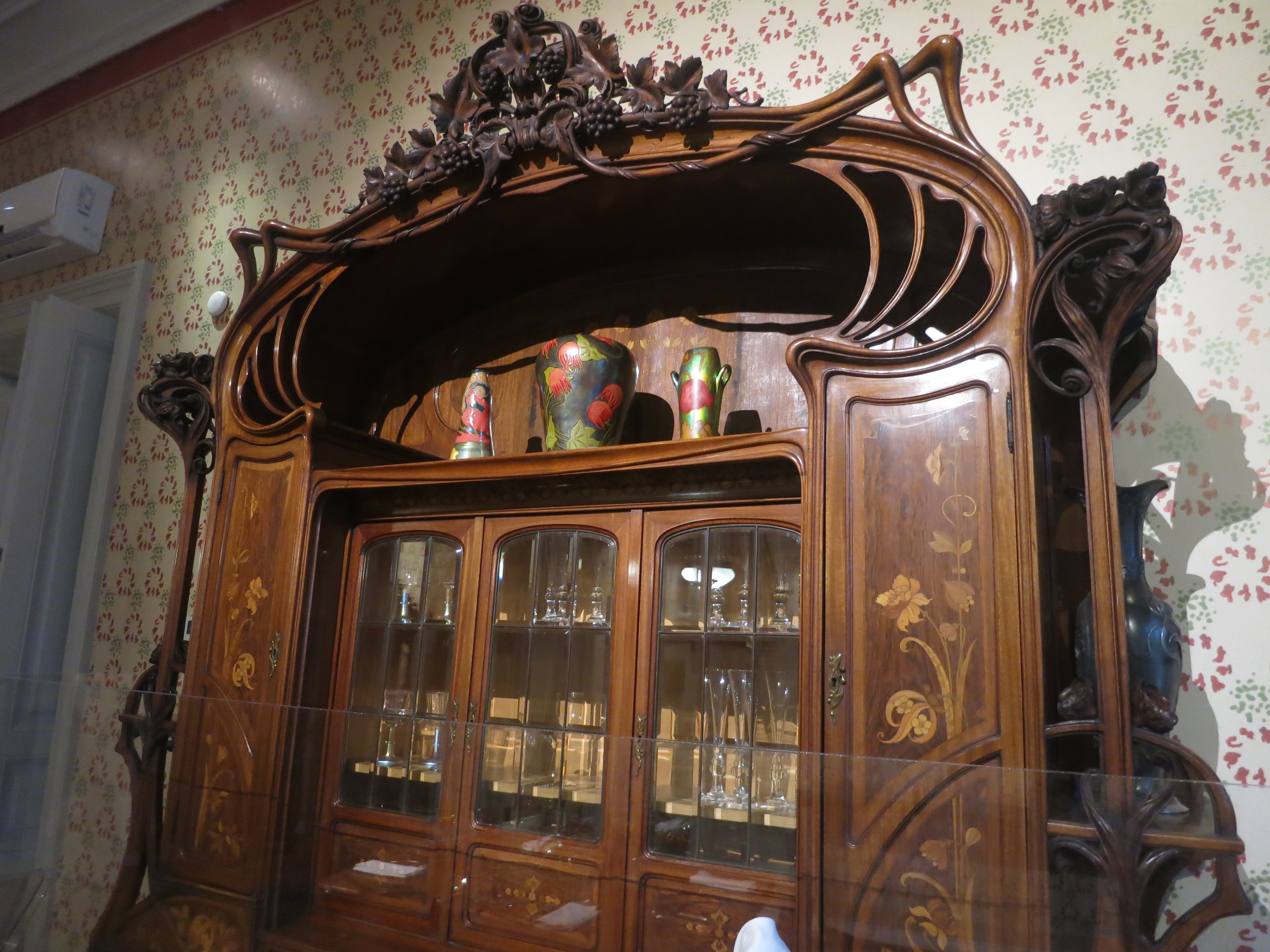


 There is also an Art Nouveau sitting room


And there is the house itself,  stairs and wooden settings by Pal Horti, iron gates by Gyula Jungfer,.


 A beautifully organized and maintained museum: recommended for anyone interested in Art Nouveau or Secession.

From the Museum

#Rath Gyorgy Museum


Saturday, February 29, 2020

The Synagogue At Leo Frankel utca 49: The Most Extraordinary Day


You walk along Frankel Leo utca in Buda, where you are told there is a synagogue that is hidden in the building. You pass many nondescript and decaying buildings, until you approach a block that seems a little newer.  You reach no. 49 and you notice Jewish signs on the building's exterior.


You peek inside the doors.


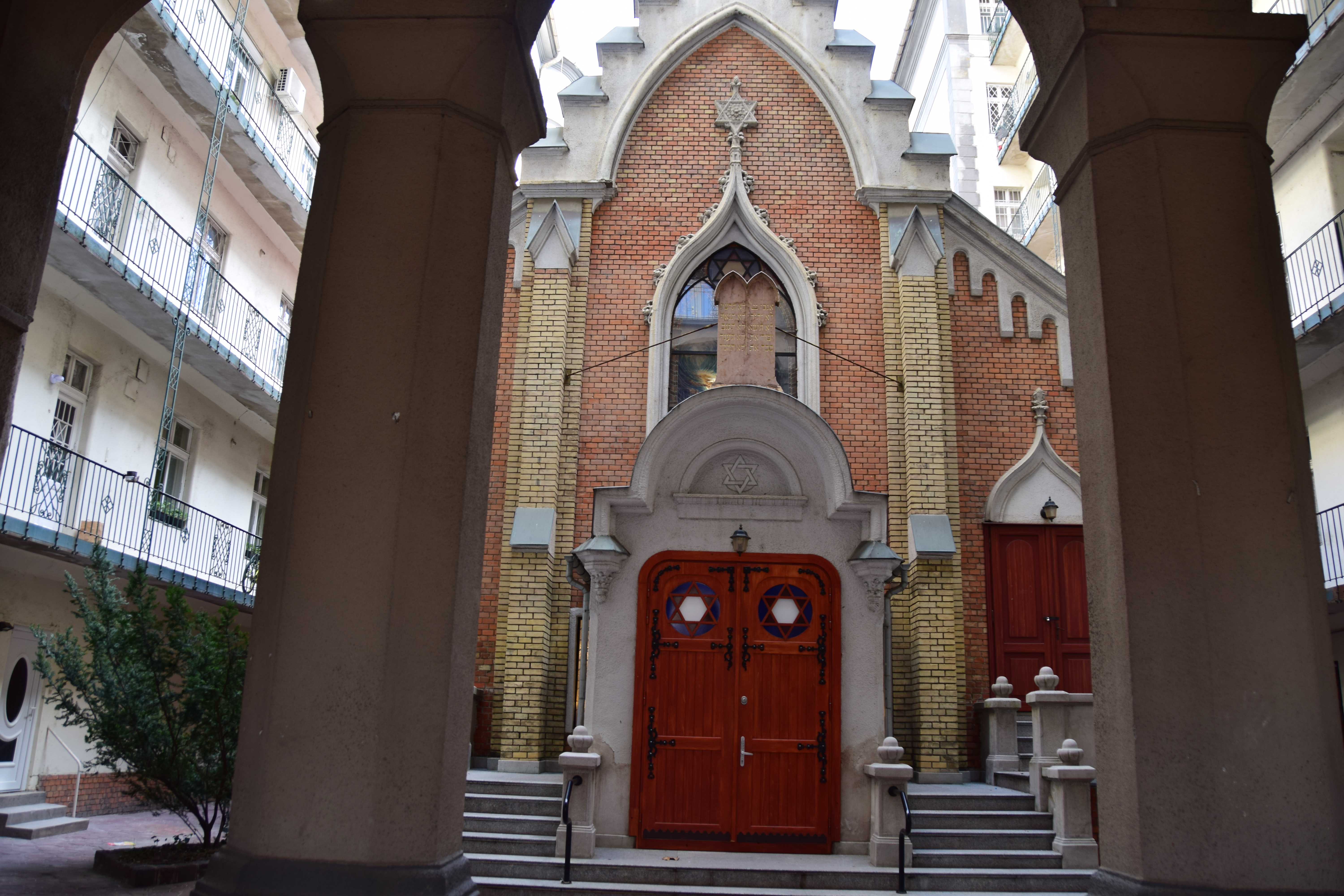
A kind woman unlocks the door and you enter a courtyard in which a small synagogue is surrounded by an tenement (apartment) building.


You notice its details.


A kind man appears and asks where you are from.  "The United States."  He asks if you are Jewish.  One of you answers "yes."  He then asks if you attend synagogue in the US, and you again say "yes.".  He asks if we would like to come inside the synagogue.  He explains that there is another person from the US there who has asked for a yahrzeit for someone who was once a member of that synagogue.  You enter the synagogue and stand in the back.

You watch as the congregants remove the Torah, read it, and return it to the Ark.  You watch as the congregation reads the Amidah.  You hear the Kaddish.  You recognize some of the Hebrew, but it is all said so fast, you miss most of the little that you know.  (You do not take pictures, but you try very hard to remember it as well as you can.)

You leave the synagogue.  The man explains that the synagogue was built in the 1880s.  (You find out it was built in 1888 by Sandor Fellner.)  He explains that the tenement building was constructed around the synagogue in the 1920s to hide and protect it.  He further explains that the hiding was unsuccessful, as the synagogue was turned into a stable, and many of the inhabitants of the complex were killed in the Holocaust.  Now only one apartment has Jewish inhabitants; the rest are Gentiles.  He shows you a sign with the names of those who were murdered in the Shoah. 


But, he explains, not everyone died.  His grandfather survived, as did his mother's family.

You thank the man profusely. You leave. You know you will remember this.  It is the only time in eastern Europe where you have been welcomed into a synagogue and people were praying and celebrating Shabbat.

#LeoFrankelUtcaSynagogue
#Budapest