Starting at the end of the block, at Bathory utca 20 is this eclectic historicist--and flamboyant--house designed by Gyla Illes in 1891.

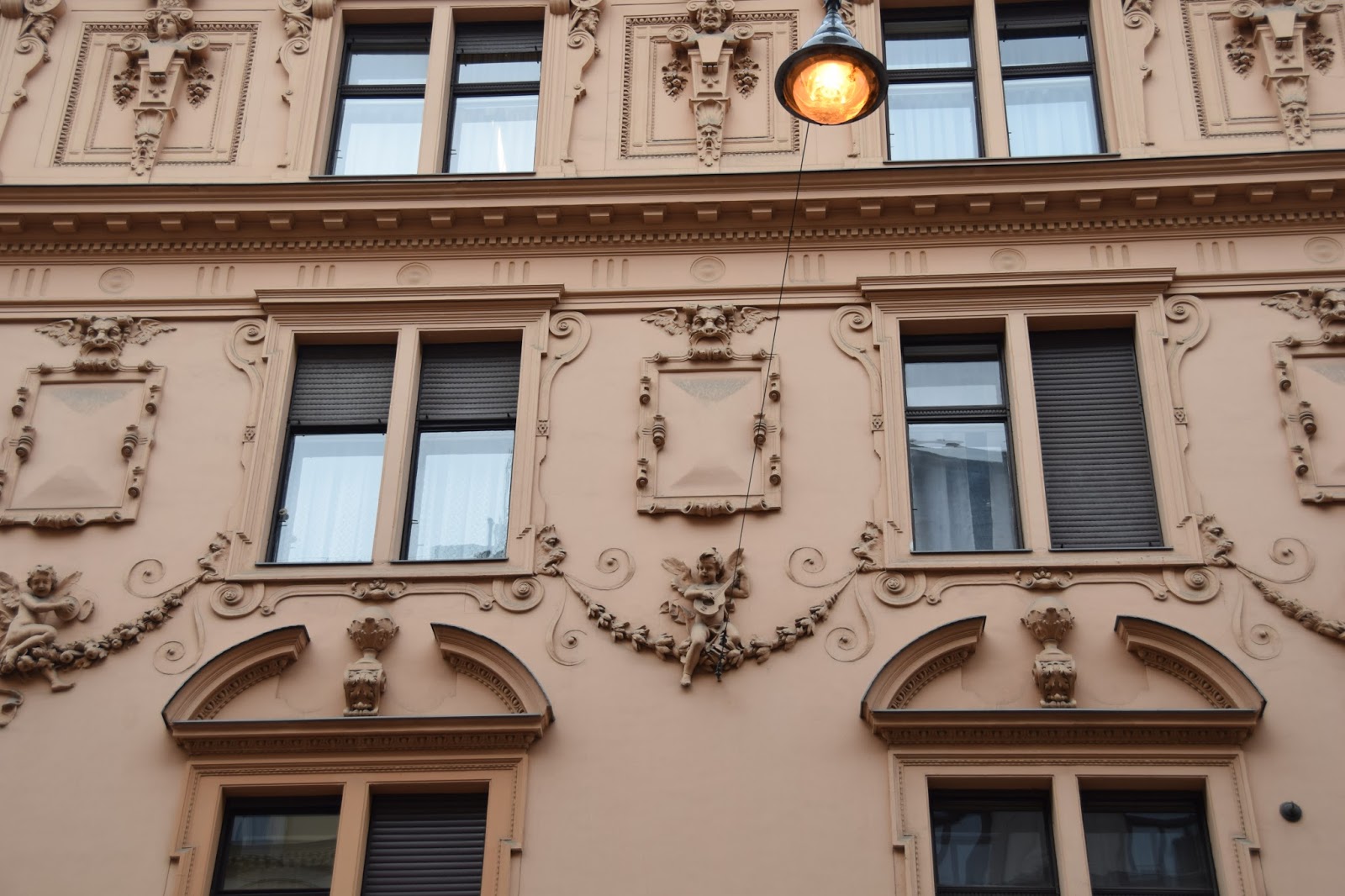


The frieze is by Karolyi Lotz (1833-1904), a famous Hungarian painter and muralist.

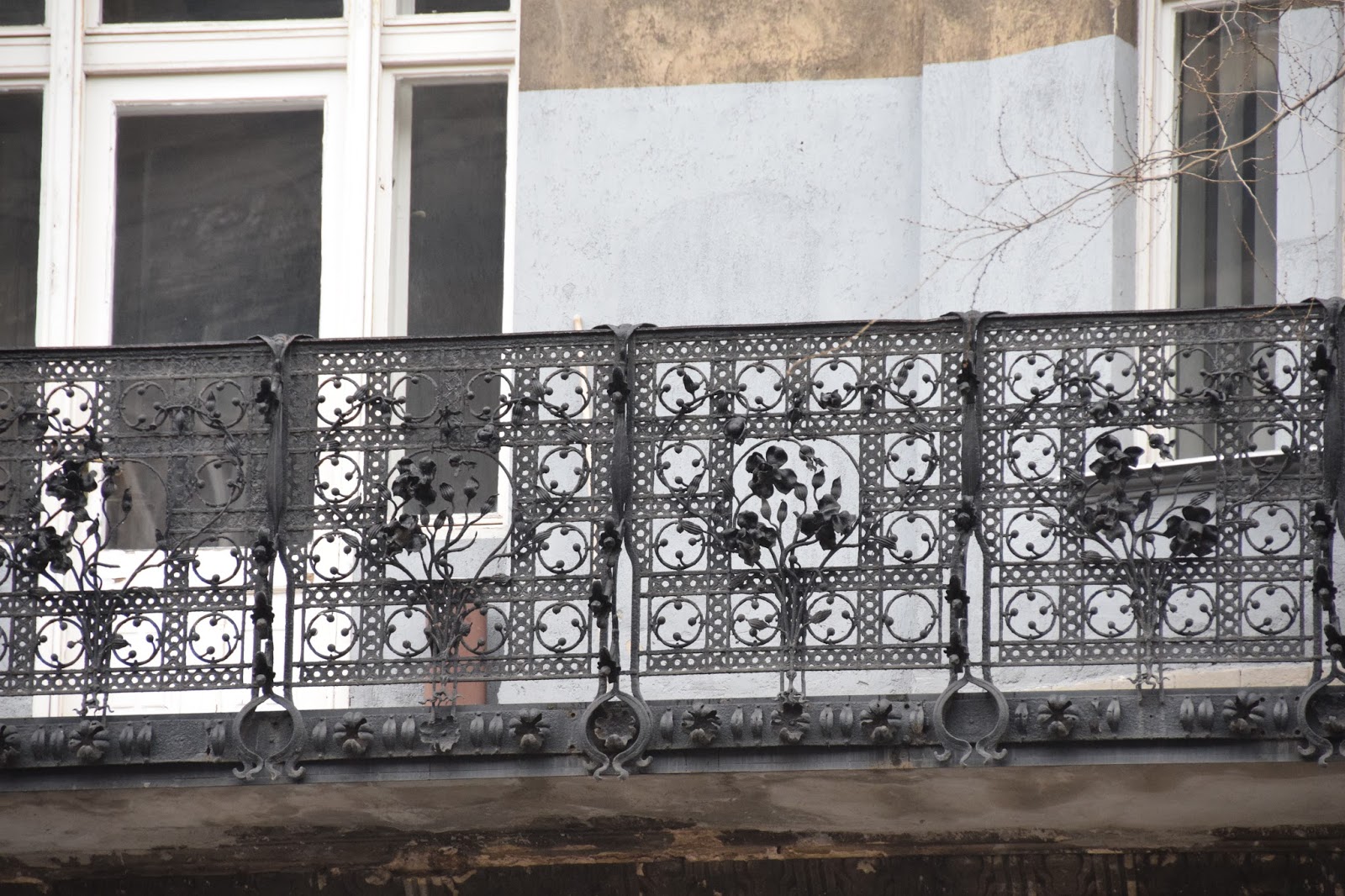
The interior has an ornate wrought iron staircase and the typical courtyard of large Budapest apartment--or tenement--buildings as they were known.


A few houses down is No. 7, the Dawidson House, built by Emil Vidor in 1903.
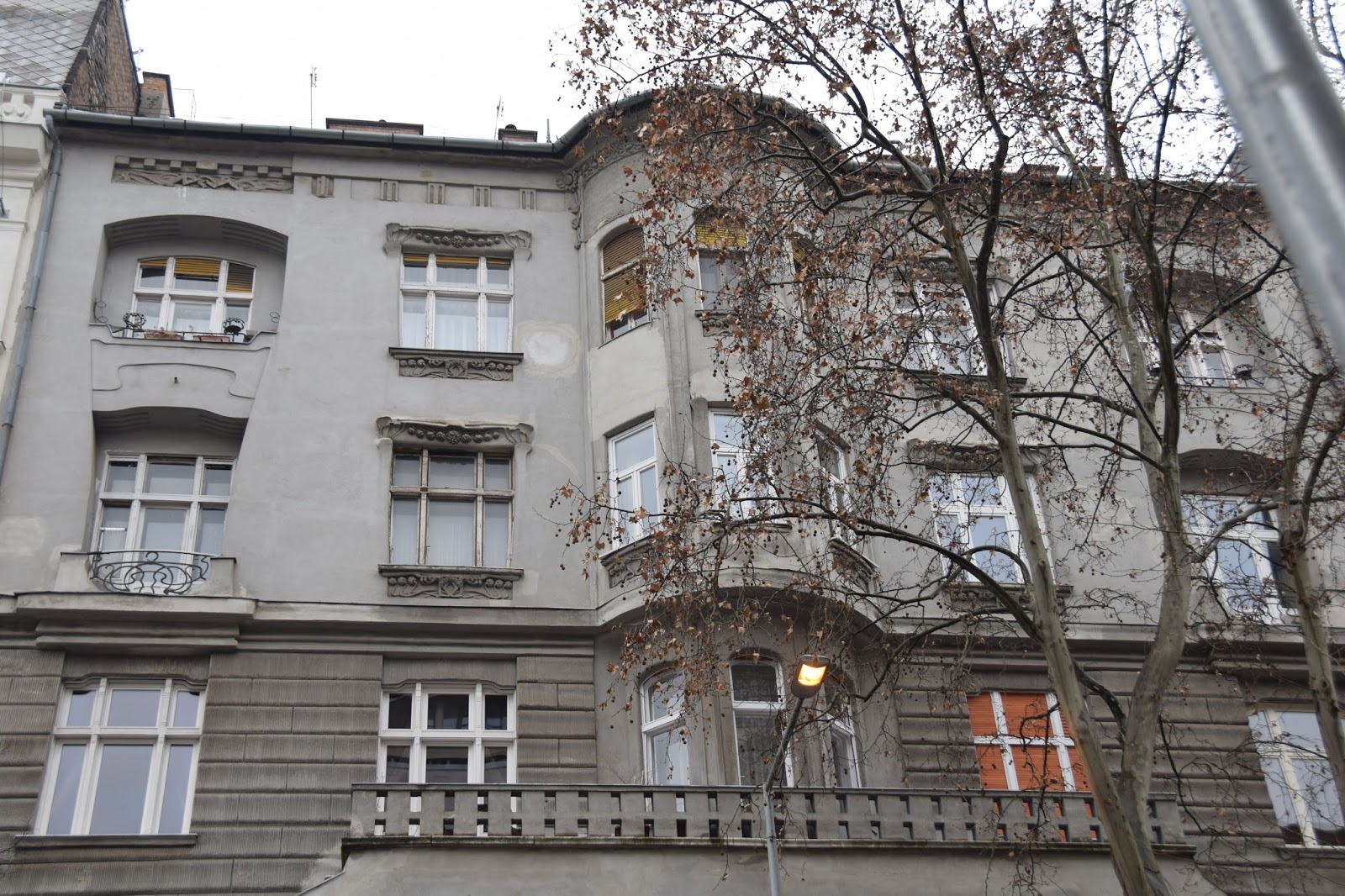
Although built only a few years later, it shows Vidor's more simplified and early modern style.


Next door at no. 7 is a more typically eclectic building, this one by Samuel Revesz and Jozsef Kollar in 1905.


Across the street from No. 7 is No 5, the main reason we came here. It was built in 1905 by the great electic historicist architect Ignac Alpar for the Neuschlosz family, for whom he also built the house on Apostol ut in Buda in 1898, (The Bathory utca building is much more typically historicist than the more imaginative villa in Buda, probably because the Buda house is a single family home rather than a "tenemant" house.)

(Note the peacocks above the door.)

No. 5 Bathory utca, which also faces Honved utca, like many great houses, "turns the corner."


Some details.


And the interior!


Across the street at Bathory ut 4-6 is the more purely historicist building by Artur Meinig, built in 1896.


And finally at No. 3 is the 1902 house by Geza Aladar Karman and Gyula Ullmann.




For those of you who have gotten this far with me, you may be asking "what does all this mean?" Pretty much damned if I know myself.
For some as-yet unfathomed reason, I find this all endlessly fascinating. Some possible reasons?
- I find the aesthetic of these buildings pleasing. (Explaining why something is or isn't aesthetically pleasing to any particular person is too complicated or mysterious for me to attempt.)
- I find it pleasing to discover how to "read" these buildings: what elements to look for and look at. In the process of this discovery, I gain a more connected or engaged form of understanding.
- I find it fun to discover the background of these buildings. It's like a kind of treasure hunt: find the building, figure out who built it, try to find out who lived there, work out what style it is, decide whether it's a good or excellent or terrible example of this particular form of architecture. (For those who take gaming seriously, I'll just say it's like a never-ending video game, where I am constantly discovering new parts of the game space. If that doesn't make any sense to you, please ignore.)
- And it seems like somehow this will come together into something interesting and meaningful, maybe the book I am trying to write?
#BathoryUtca #Budapest #Architecture #GylaIlles #EmilVidor #Samuel ReveszandJozsef Kollar #Apar Ignac #ArturMeinig #GezaAladarKarma&GyulaUllmann


.JPG)

